
Rig library
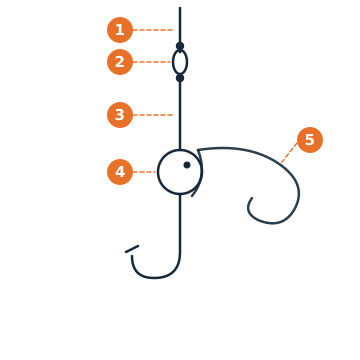
Jig and grub
Cabezon, greenling, rockfish from shore or a light boat rod; also works for walleye and bass
- 1. Main line · 20–30 lb braid
- 2. Swivel · Size 4 barrel swivel
- 3. Leader · 20 lb fluorocarbon, 60 cm
- 4. Jig head · 1–2 oz round head, 3/0 hook (1/2–1 oz for greenling)
- 5. Soft plastic · 4–5 in curl tail or paddle tail, dark, motor oil or white
Tie it: Tie braid to swivel with a Palomar. Tie leader to swivel and to the jig head with an improved clinch. Thread the plastic straight so it does not spin.
Fish it: Cast to the kelp edge or boulder seam, let it hit bottom, lift 30 cm and drop. Hits come on the drop. Set hard and lift the fish off the rocks immediately.
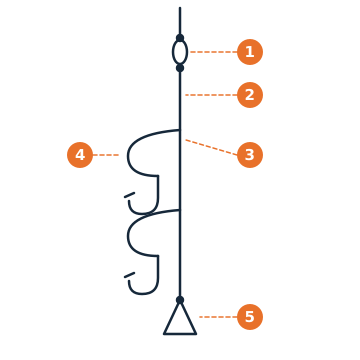
Dropper loop bait rig
Cabezon with crab or shrimp bait; surfperch with sand shrimp or worm
- 1. Swivel to main line · Size 4 barrel swivel, 20 lb braid above
- 2. Leader · 20 lb mono (10 lb for perch), 80 cm
- 3. Hooks · 2/0 baitholder for cabezon; size 4–6 for perch, on 15 cm dropper loops
- 4. Bait · Whole shore crab (hook up through the back) or shrimp in the shell; sand shrimp or clam neck for perch
- 5. Sinker · 1–2 oz bank sinker on the bottom
Tie it: Tie two dropper loops 20 cm apart. Sinker on the end loop so the baits sit just off bottom.
Fish it: Cast beside rock or pilings, keep the line tight, and wait. Cabezon take the crab and run for a hole: hit it hard and lift.
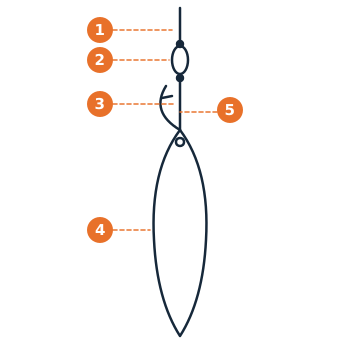
Heavy jig
Lingcod and big rockfish over structure from a boat; also from deep shore points
- 1. Main line · 50–65 lb braid
- 2. Swivel · Size 1 barrel or ball-bearing swivel
- 3. Leader · 40 lb mono or fluorocarbon, 45 cm
- 4. Jig · 4–8 oz Point Wilson Dart, Gibbs Minnow, or 6–8 in swimbait on a 3–6 oz head
- 5. Hook · Single 6/0 siwash or the jig's treble; crimp the barbs for easy release
Tie it: Braid to swivel with a double uni or Palomar. Leader to jig with a loop knot so it swings.
Fish it: Drift over the pinnacle at slack. Keep the jig in the bottom 3 m, lift a metre and let it fall on a tight line. A ling follows and grabs on the drop; reel steadily to the surface without pumping.
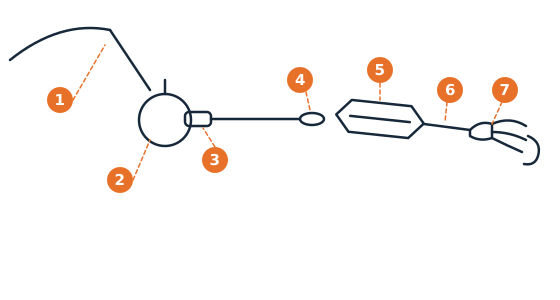
Downrigger flasher and hootchie
Chinook and coho trolling from a boat
- 1. Rod and reel · 10.5 ft mooching rod, single-action reel, 30 lb mono main line
- 2. Downrigger weight · 10–15 lb cannonball
- 3. Release clip · Stacker or cannonball clip, line 10–20 ft behind the ball
- 4. Swivel · Ball-bearing swivel to the flasher
- 5. Flasher · 11 in flasher, green/glow, chartreuse or purple haze
- 6. Leader · 25 lb mono, 5–6 ft (shorter = more action)
- 7. Lure · Glow/green hootchie, 3.5 in Coyote or Kingfisher spoon, Skinny G, or anchovy in a teaser head; single barbless hook
Tie it: Snap the flasher to the swivel on the main line. Tie the leader to the back of the flasher and the lure to the leader.
Fish it: Troll 2.0–2.5 kt along the drop-off. Winter chinook: bottom-bounce 100–180 ft. Summer: 40–70 ft at first light, deeper as the sun rises. Coho: 20–50 ft at 3 kt.
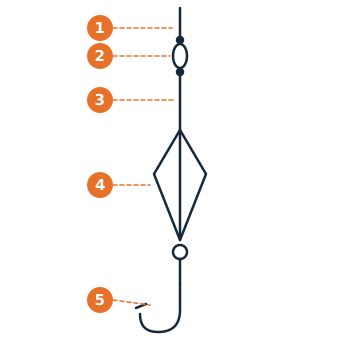
Buzz Bomb casting rig
Chinook, coho and pink from piers, points and beaches
- 1. Main line · 20–30 lb braid
- 2. Swivel · Size 4 barrel swivel
- 3. Leader · 20 lb mono, 45 cm
- 4. Buzz Bomb / Zzinger · 2.5–3.5 in, sliding free on the leader. White or pearl for chinook, pink for coho and pinks
- 5. Bead and hook · Plastic bead then a single 2/0 barbless siwash (barbless is the law for salmon)
Tie it: Thread leader through the Buzz Bomb, then the bead, then tie the hook. The lure slides up the leader when a fish takes so it cannot lever the hook out.
Fish it: Cast long, count down to depth, then lift the rod sharply and let the lure flutter down on a slack line. Most hits are on the fall. Fish the tide change in the first and last hour of light.
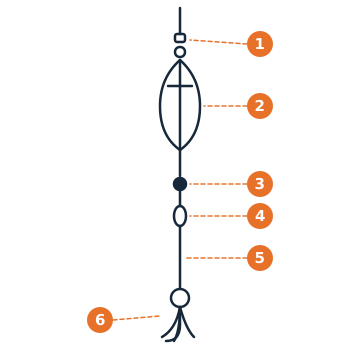
Float and jig
Chum and coho off river-mouth beaches; cutthroat in estuaries
- 1. Bobber stop and bead · Set depth so the jig rides 30 cm off bottom
- 2. Float · Slip float, 20–30 g
- 3. Weight · Pencil lead or split shot to balance the float
- 4. Swivel · Size 6 barrel swivel
- 5. Leader · 15 lb mono, 60–90 cm
- 6. Jig · 1/4–3/8 oz marabou jig, chartreuse, green or purple (pink for coho)
Tie it: Stop, bead, float, weight, swivel, leader, jig, in that order. Barbless hook.
Fish it: Cast onto the drop-off on the flood and let it drift with the current. When the float goes down, sweep sideways. Chum hold just off the river mouth in the hour before high water.
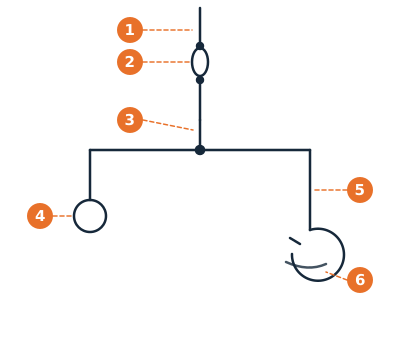
Halibut spreader bar
Halibut on sand and gravel from an anchored boat
- 1. Main line · 80 lb braid on a lever-drag reel
- 2. Swivel · Heavy ball-bearing swivel
- 3. Spreader bar · Wire spreader, 30 cm arms
- 4. Weight · 16–32 oz cannonball, enough to hold bottom
- 5. Leader · 100 lb mono, 60 cm
- 6. Hook and bait · 8/0–10/0 circle hook with whole herring, salmon belly or octopus
Tie it: Weight on the short arm, leader on the long arm. Circle hook: do not set, just reel steadily.
Fish it: Anchor on the flat at slack, drop a scent bag, and leave the bait on bottom. Small tide exchanges are the only days this works well inshore.
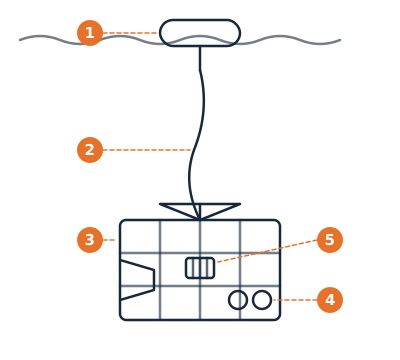
Crab trap set
Dungeness crab from a boat or dropped off a pier
- 1. Float · Cylindrical, 27 × 12 cm minimum, marked with your name and phone
- 2. Line · Leaded rope, 1.5 × depth, so it sinks clear of props
- 3. Trap · Collapsible or ring trap with rot cord
- 4. Escape rings · Two rings, 105 mm minimum (the law)
- 5. Bait cage · Fish carcass, chicken or turkey leg; cage keeps seals out
Tie it: Clip the line to the trap bridle, tie the float on with a bowline. Max 2 traps per person in Area 20; 4 elsewhere.
Fish it: Set on sand in 40–100 ft (20–30 ft off a pier) at high slack and soak over the turn. Males only, 165 mm across the back, carapace stays on until you are home. Pull only in daylight.
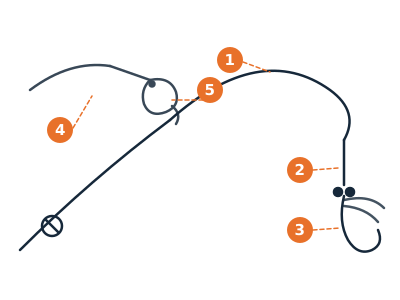
Beach fly or ultralight spin
Sea-run cutthroat and beach coho
- 1. Fly line · 6 wt floating or intermediate line
- 2. Leader · 9 ft tapered leader to 8 lb tippet
- 3. Fly · Clouser Minnow olive/white size 4–6, Rolled Muddler, or epoxy sand lance; barbless
- 4. Spin alternative · Ultralight rod, 6 lb mono straight through
- 5. Lure · 1/8 oz Gibbs Croc, size 1 Mepps, or 1/8 oz pink jig for coho
Tie it: Loop-to-loop the leader to the fly line. Tie the fly with a non-slip loop knot.
Fish it: Walk the beach on the first half of the flood at dawn. Cast along the drop-off and strip fast with pauses. Fish move with the tide, so keep walking.
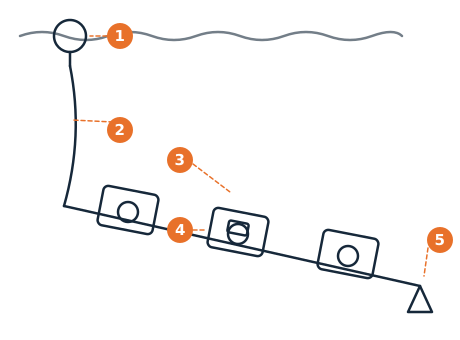
Prawn trap string
Spot prawns on inlet walls from a boat
- 1. Float · Spherical, 27 cm minimum, marked with name and phone
- 2. Line · 400 ft leaded line (1.3 × depth)
- 3. Ground line · Traps clipped 15 m apart
- 4. Traps · Up to 4 per fisher, with rot cord and bait cups of prawn pellets or cat food
- 5. End weight · 5–10 lb to hold the string on the slope
Tie it: Clip traps to the ground line with longline clips. Bait cups face up.
Fish it: Set along the wall in 200–350 ft at slack so the string lands straight. Soak 2–4 hours. Release every egg-bearing female.